
By Martha Raddatz, Richard Coolidge, Kirit Radia, Luis Martinez, Jake On Jan. 20, President-elect Barack Obama inherits a nation that is in financial turmoil and waging wars on two fronts overseas, which makes a quick, smooth transition imperative.
Already, Obama is hard at w ork selecting his Cabinet and administration.
The balloons had barely settled in Chicago's Grant Park on election night before Obama got down to business in picking his team. Some believe President Clinton handicapped himself in his first year by not moving quickly enough during the transition period. Clinton did not select his chief of staff, Leon Panetta, until days before his inauguration.
Here are Obama's picks and top contenders so far.

Obama picked New Mexico Gov. Bill Richardson for secretary of commerce, making him the first Latino in the Cabinet. Richardson is a former Clinton Cabinet member, having served as secretary of energy under Clinton. He is also a former United Nations ambassador. Richardson abandoned his own bid for Democratic nomination for president last January, and endorsed Obama in March, despite his close relationship to the Clintons.
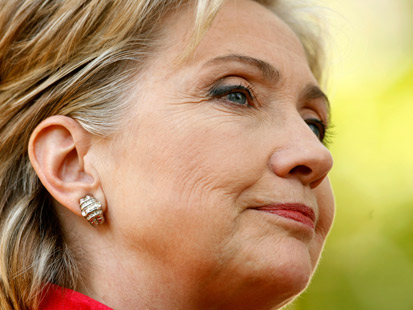
New York Sen. Hillary Clinton was officially announced as Obama's secretary of state on Dec. 1, just months after she lost her own historic bid to become the first female president. During the primaries, Clinton and Obama fought each other over foreign policy, especially the Iraq War. Clinton voted to authorize President Bush's use of force against Saddam Hussein in 2003, but during her campaign, she denounced the war. Perhaps the most infamous episode during the campaign occurred when Clinton claimed in a speech that on a trip to Bosnia in 1996, she had landed under "sniper fire." Only a video from her trip later showed that Clinton and her daughter, Chelsea, had walked calmly off the plane in Tuzla, forcing her to take back her words. Clinton has served as New York's junior senator since 2001, and sits on the Armed Services, Budget, Health, and Environment and Public Works committees. In 1996, Clinton published her best-selling book, "It Takes a Village and Other Lessons Children Teach Us." She won a Grammy award for the recorded version.
Defense Secretary Robert Gates -- a registered independent -- will be staying on in the top Pentagon job for at least the first year of the Obama administration. Barack Obama has indicated he wants a bipar

tisan Cabinet, and keeping Gates in his position might avert criticism of partisanship. Gates was appointed by president Bush in 2006 following Don
ald Rumsfeld's departure. Before taking the top job at Defense, Gates served as president of Texas A&M University but had spent a lifetime in intelligence and military, having worked as an adviser to President Reagan and as CIA director from 1991 to1993 under President George H.W. Bush.
Susan Rice, picked as the new U.S. ambassador to the United Nations, will have her work cut out for her. Under the Bush administration, relations between the U.S. and the U.N. became strained,  with many unhappy with the unilateral goals of the U.S. government and the means with which it pursued them -- including the invasion of Iraq. With a new administration, there is a hope at U.N. headquarters that "business as usual" with the United States will change. Rice's experience in government includes serving on the National Security Council during the first Clinton administration, where for two years she was special assistant to the president and senior director for African affairs. In 1997, she became assistant secretary of state for African Affairs. During her tenure, the twin embassy bombings in Kenya and Tanzania took place, giving her exposure to al Qaeda. In 2002, she joined the Brookings Institution and during the 2004 presidential campaign, she was an adviser to Sen. John Kerry. During the 2008 presidential campaign, she was a top foreign policy adviser to Barack Obama, and it appears that her counsel, wisdom and advice, along with her experience, have earned her the trust of the incoming president.
Washington law yer Eric Holder has been appointed as the attorney general in the Obama administration. Holder, 57, is the first black to hold several top Justice Department positions and if confirmed by the U.S. Senate, will be the first black attorney general.
Holder served as the first black deputy attorney general, working under then-Attorney General Janet Reno during the Clinton administration. While at the Justice Department, Holder was viewed as a centrist on most law enforcement issues, though he has sharply criticized the secrecy and the expansive views of executive power advanced by the Bush Justice Department.
Second-term Arizona Gov. Janet Napolitano was picked to lead the Department of Homeland Security. Napolitano, who served as adviser on Obama's transition team, is the first female Homeland Security secretary. An early supporter of the president-elect, Napolitano is a popular Democrat in Republican-leaning Arizona, which went in the election for native son Sen. John McCain.
Napolitano was Arizona's first female attorney general before her appointment as governor. She has been outspoken on immigration issues and has been an advocate of more federal government responsibility in border control issues.

Marine General James L. Jones will serve as Obama's National Security Advisor. The 64-year-old served for 40 years in the Marine Corps, rising from a platoon commander in Vietnam to Commandant of the Marine Corps and later served as Supreme Allied Commander of NATO. Since retiring last year as a four-star general, he has served as the Bush administration's special envoy for Middle East security and chaired the Independent Commission on the Security Forces of Iraq, a blue ribbon panel appointed by Congress that assessed the readiness of Iraqi troops. As National Security Adviser, Jones will serve as President Obama's chief adviser on national security affairs and help coordinate the interagency efforts of the Pentagon, the State Department and the intelligence community. Some of the national security issues Jones will be facing include the management of the wars in Iraq and Afghanistan and combating the terrorist threat in Pakistan; and containing the nuclear aspirations of an ambitious Iran and a flip-flopping North Korea.
Retired Admiral Den nis Blair is the top contender for the position of Director of National Intelligence, and if he takes over from Mike McConnell, he will be only the third person to have served as the nation's most important intelligence officer. The post was created in 2004 as part of the intelligence community reforms following the September 11th attacks. The director is responsible for streamlining the gathering and analysis from the 16 different agencies that make up the intelligence community. Blair last held a government job in 2002, when he retired -- after 30 years in the US Navy -- as Commander of U.S. Pacific Command. From 2003-2006, he was president of the Institute for Defense Analyses, which was largely funded by the federal government to look at military issues. The former Rhodes Scholar is considered a deep thinker with vast experience in the intelligence arena. He worked as Director of the Joint Staff in the Office of the Chairman of the Joint Chiefs at the Pentagon. He also worked in the White House on the National Security Council and was the first Associate Director of Central Intelligence for Military Support. Best story: He is known for trying to water ski behind a destroyer -- the USS Cochrane, which he commanded in the mid 1980's.

Barack Obama tapped 81-year-old Paul Volcker to chair the President-elect's Economic Recovery Advisory Board, which will be responsible for offering independent, non-partisan economic analysis and advice to Obama. Volcker served as Federal Reserve Chairman under presidents Carter and Reagan. He has been criticized for driving up interest rates during his time but is also known for cutting inflation. One of Obama's top economic advisors during the campaign, Volcker has been a staunch proponent of government regulation. Austan Goolsbee, an economics professor at the University of Chicago, will serve as Staff Director and Chief Economist of the Recovery Advisory Board and act as the primary liaison between the Board and the Administration.

Obama announced his economic team Nov. 24, including his selection of Timothy J. Geithner to be secretary of treasury. Geithner is president of the New York Federal Reserve. Similarities between Geithner and the President-elect are clear at every turn. Geithner is well-known on Wall Street and the Dow Jones Industrial Average soared almost 500 points Nov. 21 when the news leaked out.

Larry Summers has been tapped to lead Obama's National Economic Council. Summers was Treasury secretary under Clinton and became president of Harvard University after leaving Treasury in 2001. He resigned from his post at Harvard a year after making a controversial speech about women's success in math and science careers.
Before serving in the Clinton administration, Summers was one of the youngest tenured professors in Harvard's history, served as chief economist of the World Bank, and worked as an economic adviser in the Reagan administration. Summers' appointment to the National Economic Council does not require Senate confirmation.

To lead the Council of Economic Advisers, which is in the executive office of the president, Obama selected Christina Romer. Romer is a well-respected economist and economics professor at the University of California at Berkeley. Previous chairs of the Council of Economic Advisers include Ben Bernanke, Greg Mankiw, Laura D'Andrea Tyson, and Alan Greenspan.

Obama also announced that Melody Barnes would be director of the Domestic Policy Council. Barnes is the executive vice president for policy at the Center for American Progress. She has also served as Sen. Edward Kennedy's chief counsel on the Senate Judiciary Committee and as the U.S. Equal Employment Opportunity Commission's director of legislative affairs.

ABC News has confirmed that Tom Daschle has accepted an offer from Obama to lead the nation's Department of Health and Human Services. If confirmed by the Senate, the former South Dakota senator would replace Health and Human Services Secretary Michael Leavitt in guiding critical, high-profile federal agencies, including the Food and Drug Administration, the Centers for Disease Control and Prevention, the Centers for Medicare and Medicaid Services, and the National Institutes of Health.
Daschle was Senate majority leader under Clinton. Even before Obama was elected, he had reportedly told confidantes he was most interested in a position at HHS because he thought health care would be one of the most important issues facing the new administration. His book, "Critical: What We Can Do About the Health Care Crisis," was published in February.
Rep. Rahm Emanuel, D-Ill., has accepted the position of White House chief of staff. A veteran of the Clinton administration and a close Obama political ally from Chicago, Emanuel brings experience, knowledge of Capitol Hill and a sense of duty and loyalty. Obama reportedly told associates, according to ABC News' George Stephanopoulos, that he believes Emanuel will "have his back."
Emanuel served 6½ years under Clinton and has been a member of Congress for four terms. He has moved up through the congressional ranks and knows how to work Washington. While these are certainly qualifications for his new job, they also may have posed some reservations in him accepting the position. Emanuel was said to have ambitions to someday be House speaker. He also has young children and cited his family as a big consideration when making the decision.

Obama chief campaign strategist David Axelrod has been tapped to be White House senior advisor. The Chicago native has known the president-elect since 1993, longer than anyone else in Obama's inner circle. He is widely credited for helping Obama's political ascent and has been on the forefront of his campaign.
In his acceptance speech, Obama said Axelrod has been "a partner with me every step of the way." Axelrod is not new to the political scene. He has advised several Democratic candidates since 1985 and is reportedly close friends with Chicago Mayor Richard M. Daley.
In a profile of Axelrod, the Los Angeles Times cited a description of him as "Obama's answer to Karl Rove and the most powerful political consultant not on a coast." Axelrod has said he became interested in politics at the age of 5, when he watched John F. Kennedy become president.

Robert Gibbs, one of Obama's top aides, will become Obama's White House press secretary. Gibbs helped lead the campaign's communication team as the senior strategist for communications and message.
The 37-year-old Alabama native is a regular on cable news and the morning talk show circuit. Despite the occasional sparring with "Fox and Friends" host Sean Hannity, the lighthearted Gibbs is said to have a good rapport with reporters.
The potential White House podium dweller is a longtime Obama loyalist and has been a constant force on the trail ever since the president-elect first ran for the U.S. Senate in 2004. Before working for Obama, Gibbs was an aide to Sen. John Kerry in 2003. He left the Kerry campaign before Kerry clinched the 2004 presidential nomination.

Obama nominated Peter Orszag as director of the Office of Management and Budget director. Orszag began his assignment as the seventh director of the Congressional Budget Office in January 2007, and during his term, has been credited for his work on health care and climate issues. Like many other Cabinet picks, Orszag is a veteran of the Clinton White House where he previously served as an economic adviser.

Close Obama family friend and adviser Valerie Jarrett is serving as a White House adviser. An Obama campaign source tells ABC News that Jarrett has been named senior advisor and assistant to the president for intergovernmental relations and public liaison.

John Podesta heads up Obama's transition team. Podesta served as White House chief of staff under Clinton from October 1998 until the end of his term and is currently the president and CEO of the Center for American Progress.


0 comments
Post a Comment